Maud not only lived through the First World War, but painstakingly recorded every facet of its unfolding in her journal. In Magic Island: The Fictions of L.M. Montgomery, it explains that she methodically recorded world news and took care to include even the most minor details that others in her time may not have noted so carefully. And while she was keeping track of Canada’s involvement in the war, she was also recording some of her own tragedies.
On August 30, 1914, she wrote: “On August 13th a darling little son was born to me—dead…While I was lying helpless bad war news began to come too—news of the British defeat at Mons and the resulting long dreary retreat of the Allies which is still going on before the victorious rush of Germany’s ready millions. Everything seems dark and hopeless.” And just a few days later, after writing about the painful experience of going to her baby’s gravesite, Maud also distressingly wrote about the German’s advance on Paris.
Maud’s journal entries were very exact. “How closely her intense response reflects [Canada’s] general instant absorption in the war can be seen by a look at contemporary newspapers. For instance, in the week the war began, the Family Herald and Weekly Star offered maps of the war zones to new subscribers; by September 4, 1914, 10,000 had been distributed. In her journal, Montgomery constructed a verbal equivalent of that map, touching in all the places and campaigns she would eventually use in Rilla of Ingleside.”

The 116th Battalion in Leaskdale - from the University of Guelph Library
Maud reflected on the way she and the people of Leaskdale - the small Ontario town she lived in - reacted to the news of the war and incorporated that into the way she portrayed the Blythe family in her novel. Though there were only 12 families in Leaskdale, 21 men enlisted and only 15 returned.
In Magic Island, Elizabeth Waterston writes, “In Rilla of Ingleside, the Blythe family in Glen St. Mary’s reacts to each successive event, just as Montgomery had done in the vivid contemporary notes preserved in her diary. The quiet neighbourhood enlarges its horizons as it becomes concerned with Antwerp, Turkey, Serbia, Calais, Lodz, Warsaw, Szuro, Belgrade, and Prezemysl, a weird concatenation for the parochial minds in Glen St. Mary. Thanks to her wartime journal, Montgomery was able to lift into literary form the daily life on the home front between 1914 and 1918, creating one of the very few records of war from a woman’s perspective.”
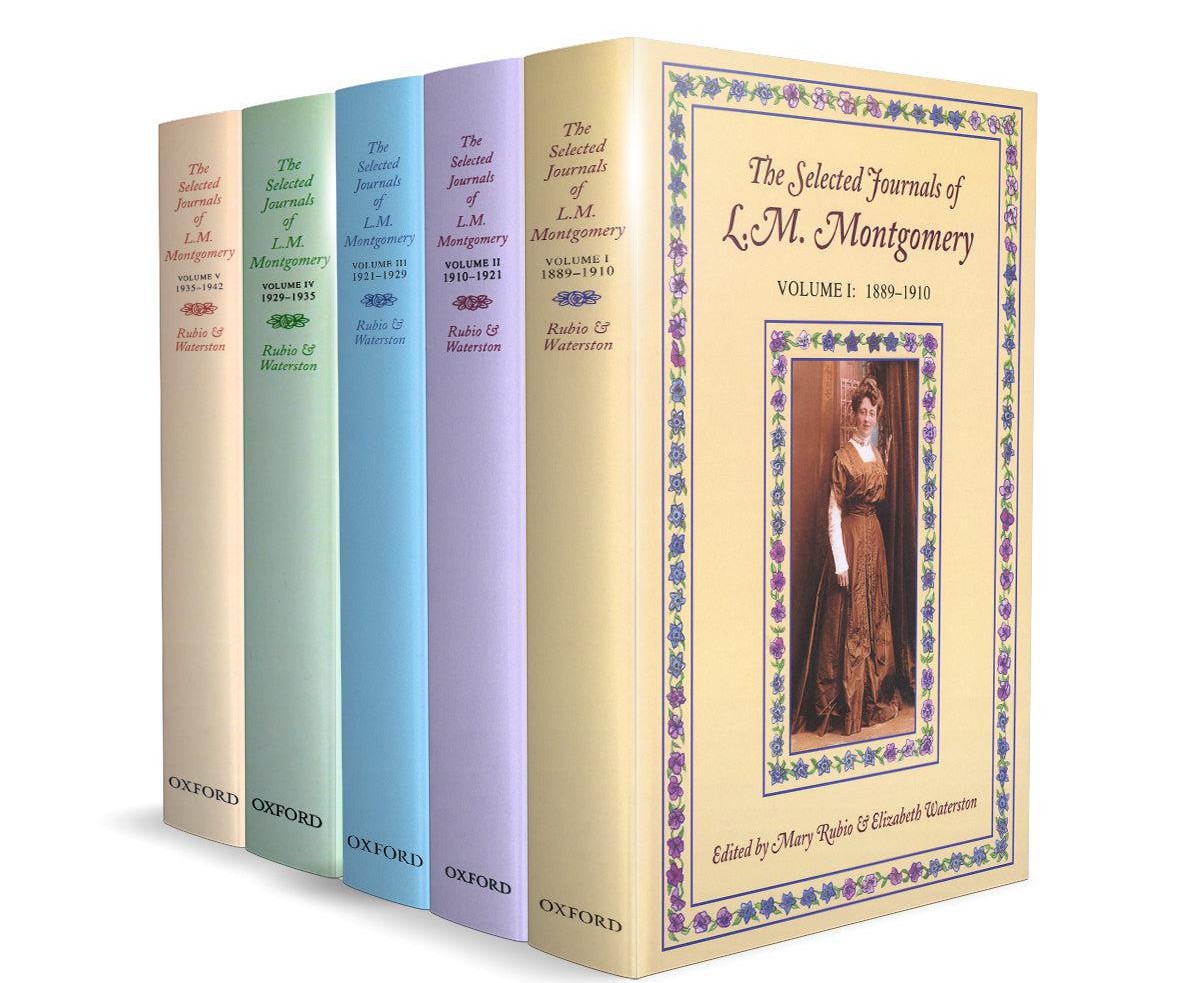
To read more about Montgomery’s creation of the novel, and how she incorporated elements of love and romance, take a look at Magic Island: The Fictions of L.M. Montgomery, as well as her journal – The Selected Journals of L.M. Montgomery, Volume II: 1910-1921.
Photos: The Lucy Maud Montgomery Album