Wednesday, 28 April 2010 15:20

Jane Austen and Lucy Maud: Building Family Through Letters

Rate this item
(1 vote)

"I wonder if, a hundred years or so after you and I are dead someone will dig up our old letters and if so will they create any furore." - L.M. Montgomery to G. B. MacMillan, 1926

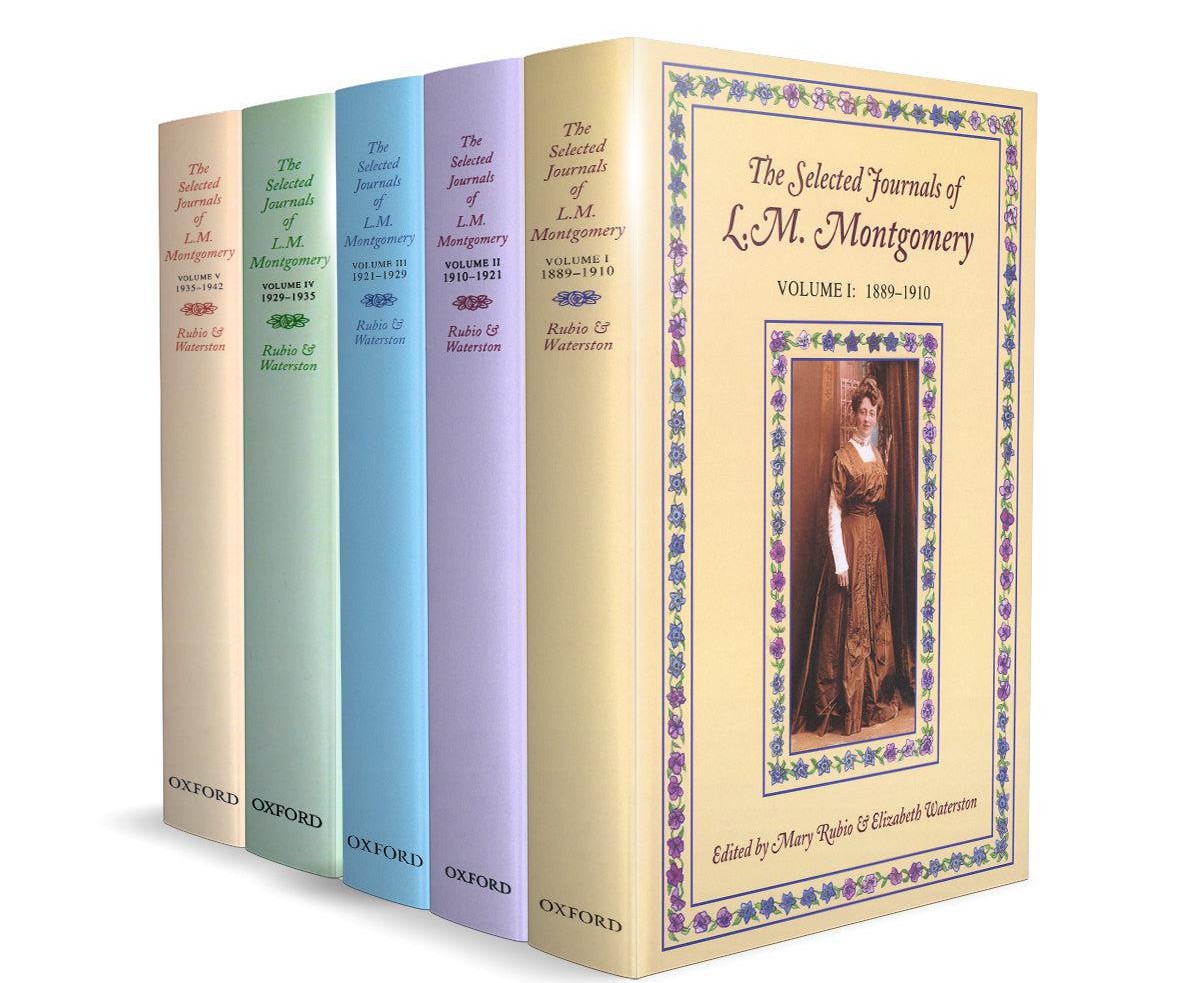
Though she was born nearly one hundred years after Jane Austen, in another country and era, Lucy Maud Montgomery had a lot more in common with the famous Victorian author than you might think.

Besides her novels, Lucy Maud is known for her proficiency in letter writing and her habit of keeping a journal for her entire life.  Her deepest thoughts and musings were often communicated through her letters, especially to her pen pal George Boyd MacMillan who was an aspiring novelist, living in Scotland.  Though MacMillan was not an official member of her family, Lucy Maud's friendship with him was enhanced and maintained through their letters to each other.  In the introduction of the book, "My Dear Mr. M: Letters to G.B. MacMillan from L.M. Mongtgomery," it is written, "Their espistolary conversations over the thirty-nine-year friendship range from the structure of the universe to the proper method of caring for daffodils."

It is the relationships they maintained with their families and friends, regardless of distance – mainly through letter writing – that forms one of the many connections between Lucy Maud and her predecessor, Jane Austen.  Readers of their letters and journals can appreciate how the act of keeping up correspondence with loved ones helped their own well being and revealed quite a lot about their own writing.

Jane Austen's main pen pal was her older sister Cassandra, who, according to the book "Jane Austen's World", was the most important person in her life.  Jane looked up to her sibling and respected the differences in their personalities, especially Cassandra's ability to maintain composure and be sound in judgement, while Jane tended to be more spirited in outward emotion.  When Jane was a young girl and begged to go to school with Cassandra, her mother is said to have remarked, "If Cassandra were going to have her head cut off, Jane would insist on sharing her fate.”

Jane came from a family of skilled letter-writers and throughout her short life, she wrote a few thousand of her own.  Most of the existing letters were written to her sister, Cassandra.  In that time period - the end of the 18th century - letters were written on a large piece of paper and folded by four, with a space left for the address.  The recipient would always pay for the letter, because there was no stamp system, and the cost depended on the number of sheets in the letter and the distance the postman had to travel.  Sometimes the two women had so much to say to each other that they made a checkerwork of their letters.  Maggie Lane, author of "Jane Austen's World," writes, "If there was a great deal to say a second set of lines would be written at right angles across the first, making the 'checkerwork' that Miss Bates refers to in Emma.”

Since Jane's extensive family was scattered over the country, whenever anyone paid visits they would stay for extended periods of time.  When one of the sisters was away, they would write to each other every day.  Once they mailed one letter, they’d begin writing another one – always starting with the latest news and then addressing their sister’s news.  The letters were full of domestic and sometimes seemingly trivial information to the outside eye, but always contained acute observations of the people and places around them.  Jane's letters were said to be “minor work(s) of art” themselves, in addition to her novels.  Cassandra kept Jane’s letters, but censored them quite a bit (taking out embarrassing health topics or personal remarks about family members).  But even with these parts removed, readers of Jane's correspondence can see a truly original mind at work and they can identify just as much with her letters as with her novels.

To see what Lucy Maud Montgomery novels Shop At Sullivan offers, click here.

Sources: "Jane Austen's World", "My Dear Mr. M: Letters to G.B. MacMillan from L.M. Mongtgomery"

Last modified on Monday, 04 April 2011 16:16
Clare

Clare

E-mail: This e-mail address is being protected from spambots. You need JavaScript enabled to view it

2 comments

  • Comment Link Clare Tuesday, 11 May 2010 11:48 posted by Clare

    I completely agree. There's something special about a handwritten letter because it communicates a greater effort on the writer's part than an email or facebook message does. I make a point of printing off long email letters so that I have a hard copy I can look at later. You're very right to say that it is a dying art. I hope that we can try to keep it alive for a little while longer.

    This e-mail address is being protected from spambots. You need JavaScript enabled to view it
  • Comment Link Sarah McCoy Saturday, 08 May 2010 15:57 posted by Sarah McCoy

    Wonderful post! I'm a great fan of handwritten letters. It's almost become a dying art. I do believe emails (well-written ones-- not to include texting/tweeting hybrid English) have become the 21st century's "letters." Unfortunately, these might be more difficult for future historians/readers to get their hands on. Nothing is more meaningful to me than old letters I've found between my parents during their courtship, between my grandparents during Vietnam, between myself and old friends. They speak so much to the character of the writer's heart and their connection to world at large.

    This e-mail address is being protected from spambots. You need JavaScript enabled to view it

Add comment


Login Form