Scholars of Lucy Maud Montgomery have often pointed out the similarities between the author and her heroine. Some of their circumstances in life, as well as their wild imaginations, form the greatest links between the two women. But it is also through looking at L.M.'s own childhood that we can start to see traces of Anne’s spirit as they developed in the author herself.
L.M admits in her own journals that when she first began writing Anne of Green Gables, she cast away any moral ideals about what her character should be because she wanted to make Anne a real human girl. She also used her own experiences in P.E.I to add detail to the novel. “Cavendish scenery supplied the background and Lover’s Lane figures very prominently,” she wrote, on August 16, 1907, after just completing the first Anne novel. “There is plenty of incident in it but after all it must stand or fall by ‘Anne’. She is the book”
L.M.’s love of reading was developed at a very early age. She recalls that besides her father, her two main pleasures as little girl were dolls and books and that she was “always fonder of reading than of anything else.” Though her grandparent’s house in Cavendish, where L.M. grew up, could not boast an extensive library, L.M. was content to read the same works over and over again, like The Pickwick Papers and Rob Roy. “Fortunately I could read anything I liked over and over repeatedly, extracting fresh interest and sweetness from it every time…I had already begun to live that strange inner life of fancy which has always existed side by side with my outer life—a life into which I have so often escaped from the dull or painful real…Ah, yes, many a happy hour I spent, lying there on my pillows in the dim room.”
Perhaps Anne’s friend in the mirror, Katie, was inspired by those lonely moments L.M. often felt growing up with no siblings, under the care of austere grandparents.
In addition to both girls allowing their imaginations to wander – often preferring to live in a world of their own making – L.M. was also considered very smart and well advanced for her age. In 1910, as an older women, she recalls her first days in school:
…I remember—with a little thrill to this day—the compliment the teacher paid me on my reading—the first compliment I have any recollection of receiving. We were standing up in the side aisle and our lesson was the immortal rhyme, “How Doth the Little Busy Bee”. We all read in turn and then “the master” said of me, “This little girl reads better than any of you, although she is younger and has never been to school before.” How my heart swelled! Truly, the trite old worlds of the trite old song are as true as most trite things are—“Kind words can never die”.
L.M.’s thirst for knowledge and the importance she placed on expanding her own mind through reading, writing and study, are all intrinsic qualities that shaped Anne’s own childhood and direction in life.
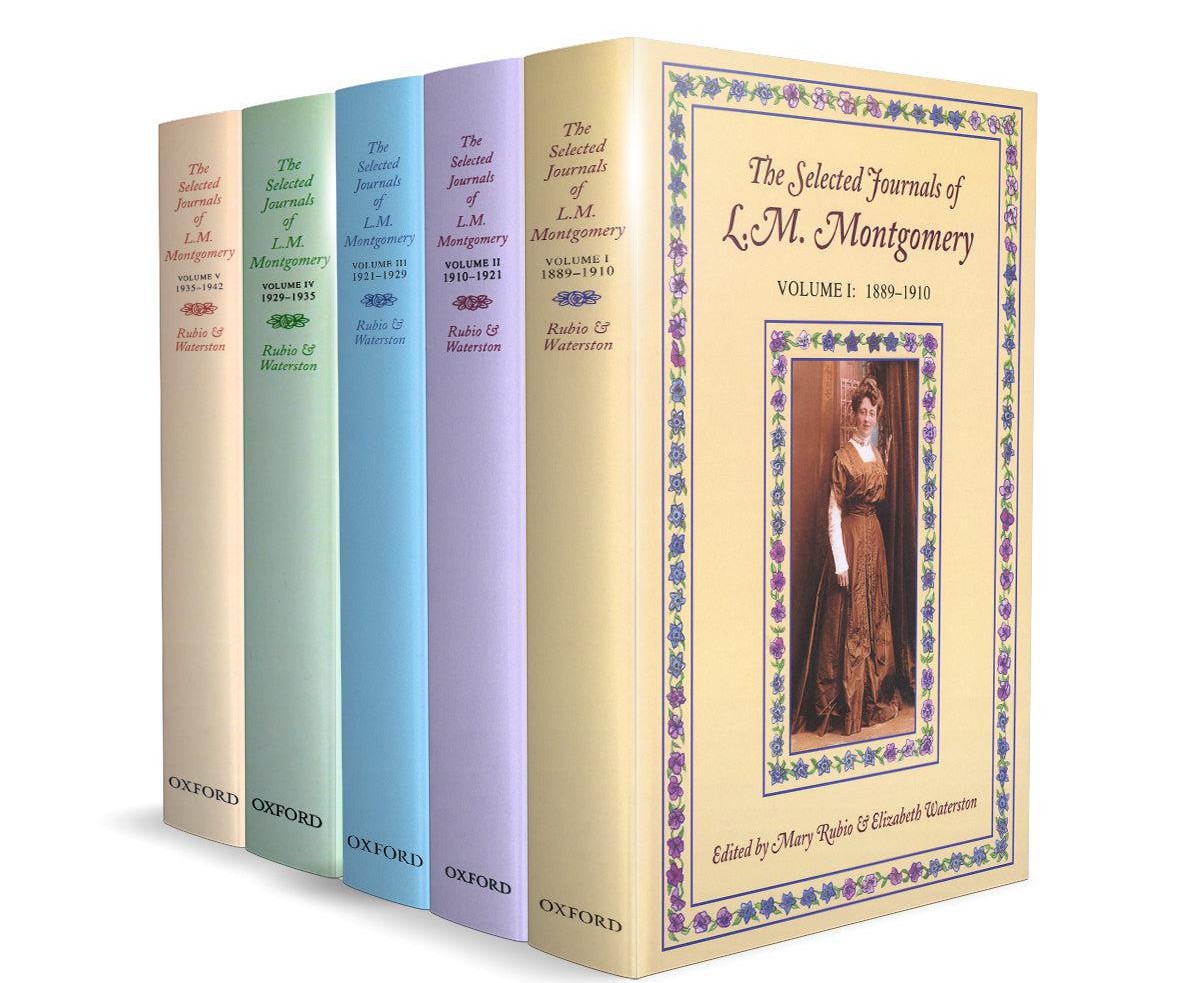
Source: The Selected Journals of L.M. Montgomery - Volume 1: 1889-1910